
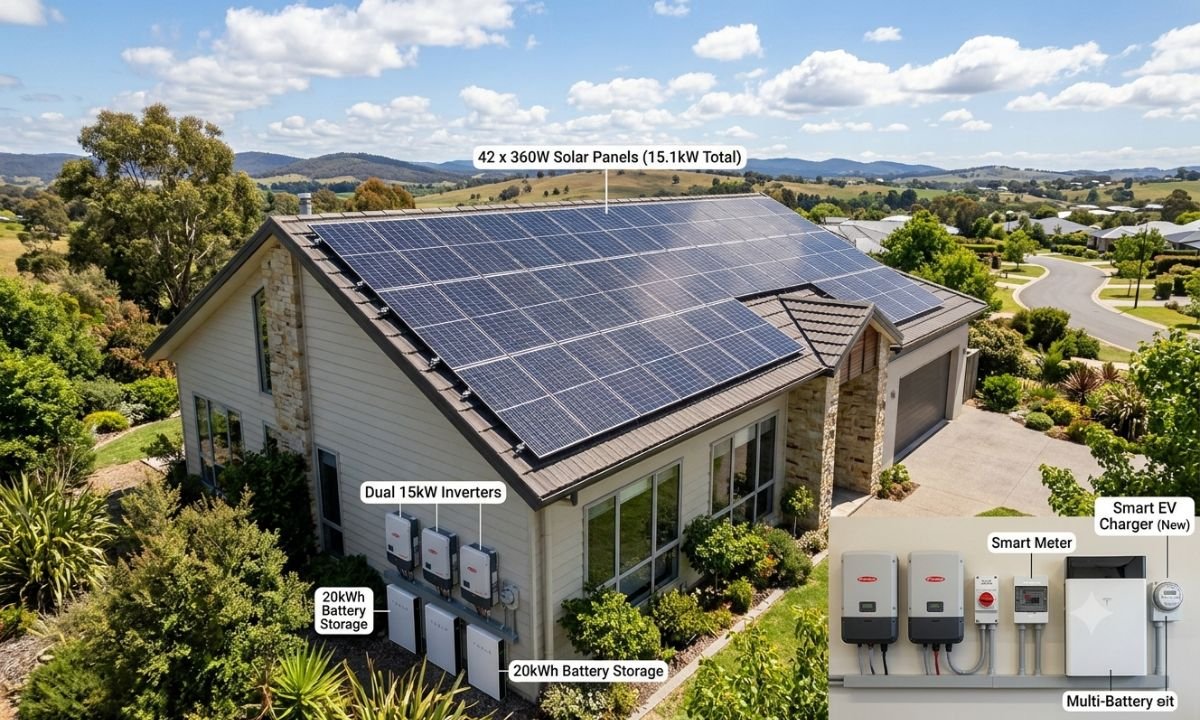
A 15kW solar system is a popular choice for large homes, big farmhouses, and small businesses in Pakistan. It can power several air conditioners, heavy motors, and many appliances at once. Many people are now shifting to this size because it covers most of their daily electricity needs. It also gives a good balance between cost and power output.
In 2026, the price of a 15kW solar system in Pakistan depends on many factors. These include the brand of panels, the type of inverter, and whether you choose a hybrid or on-grid system. Battery backup also adds extra cost to the total price. On average, most systems fall within a certain range, but exact prices vary from city to city and dealer to dealer.
Rising electricity bills are the main reason people are moving towards solar energy. A 15kW system can greatly reduce or even remove monthly electricity bills for many households. It also gives protection against frequent load-shedding in different areas. Over time, the system pays for itself through these savings.
Before buying a 15kW solar system, it is important to compare prices from different suppliers. Checking the quality of panels, inverters, and installation service is just as important as the price. A slightly higher price with better equipment can save money in the long run. This makes research and planning a key step before investing in solar.
What a 15kW Solar System Really Means
A 15kW solar system is a large power plant for your home or small business. The number “15kW” tells you how much electricity the system can produce at one time, under full sunlight.
This size is popular with big houses, especially 1-kanal and 2-kanal homes, and with small offices, clinics, schools, and shops. If your home runs 3 to 5 air conditioners, several fans, a fridge, a washing machine, water motors, and other daily appliances, a 15kW system is usually the right fit.
On a normal sunny day in Pakistan, a 15kW system produces around 60 to 75 units (kWh) of electricity per day. Over a full month, that adds up to roughly 1,800 to 2,200 units, which is enough to run a heavy-load home almost completely on solar power.
15kW Solar System Price in Pakistan 2026 (Quick Overview)
Before going into details, here is the price range you came here for. These are real installed prices, not just panel and inverter costs.
| System Type | Battery Backup | Price Range (PKR) |
| On-Grid (Net Metering) | No battery | 1,220,000 – 1,800,000 |
| Hybrid (No Battery) | No battery, but backup-ready | 1,750,000 – 2,100,000 |
| Hybrid with Lithium Battery | 10kWh battery | 2,400,000 – 3,000,000 |
| Hybrid with Larger Battery | 15–20kWh battery | 3,000,000 – 3,800,000 |
These prices include solar panels, inverter, mounting structure, wiring, safety protections, and installation labor. Net metering application charges are usually separate and are explained later in this guide.
Keep in mind that solar prices in Pakistan change often because most equipment is imported. Currency exchange rates, import duties, and international panel prices all affect the final cost you pay.
Why Prices Differ So Much: Main Cost Factors
Two people can ask for a “15kW solar system” and get very different quotes. Here is why.
1. Type of System (On-Grid vs Hybrid vs Off-Grid)
- On-grid systems connect to the WAPDA power line and use net metering. They are the cheapest option but give no backup when load shedding happens.
- Hybrid systems connect to WAPDA and can also add a battery. They keep some appliances running during a power cut.
- Off-grid systems work fully independent of WAPDA. They are rare for homes because they need very large and expensive battery banks.
2. Solar Panel Quality
Panels are usually the biggest cost item in any solar system. A 15kW system typically needs around 24 to 28 panels, depending on the wattage of each panel.
| Panel Type | Common Brands | Price Level | Efficiency |
| Poly Panels | Older stock | Lowest | Lower output |
| Mono PERC | Jinko, JA Solar, Canadian Solar | Mid-range | Good |
| N-Type TOPCon | Jinko Tiger Neo, LONGi Hi-MO, Trina | Premium | Highest |
N-Type panels cost more upfront but produce more electricity per panel and lose less power over time, so many buyers now prefer them for large systems like 15kW.
3. Inverter Brand and Capacity
The inverter is the brain of your solar system. It changes DC power from the panels into AC power your home can use.
- Entry-level inverters (Solis, Growatt, Must): affordable and reliable for basic needs.
- Premium inverters (Huawei, Sungrow, Deye, GoodWe): smarter monitoring apps, better warranties, and stronger battery management.
For a 15kW load, you may need a single 15kW inverter or two smaller inverters working together, depending on the brand and your electricity connection type.
4. Single-Phase or Three-Phase Connection
Your WAPDA meter connection type affects your inverter choice.
- Single-phase homes usually need a single-phase hybrid inverter.
- Three-phase homes and commercial buildings often need three-phase inverters, which cost more but balance load better across heavy machines.
5. Battery Storage
Adding a lithium battery is what pushes the price up the most. A 10kWh lithium battery can add PKR 700,000 to 1,000,000 or more to your total cost, but it gives you real backup power when the grid goes down.
6. Structure, Wiring, and Installation Quality
Cheap aluminum stands and thin wiring may save money today but can fail early. Good quality mounting structures, proper earthing, surge protection devices, and DC/AC circuit breakers protect your investment for the next 20-25 years.
7. City and Installer Location
Prices in Lahore, Karachi, and Islamabad can differ by 5-10% because of transportation costs, local competition, and wholesale market access. Cities with strong solar markets, like Lahore’s Hall Road, often offer slightly lower panel prices.
15kW Solar System Cost Breakdown
Here is roughly how the total cost of a 15kW on-grid system is divided among its main parts. This is a general guide, not an exact quote.
| Component | Approximate Share of Total Cost |
| Solar Panels | 40% – 45% |
| Inverter | 20% – 25% |
| Mounting Structure | 8% – 10% |
| Wiring & Protections | 5% – 8% |
| Installation Labor | 8% – 10% |
| Net Metering Setup | 3% – 5% |
If you add a battery, the battery alone can take up 25% to 35% of your total budget, since lithium batteries are expensive components.
On-Grid vs Hybrid 15kW System: Which One to Choose
Choosing between on-grid and hybrid is the biggest decision you will make. Here is a simple comparison to help you decide.
| Feature | On-Grid System | Hybrid System |
| Price | Lower | Higher |
| Net Metering Support | Yes | Yes |
| Backup During Load Shedding | No | Yes (with battery) |
| Works Without WAPDA | No | Only with battery |
| Best For | Areas with stable grid supply | Areas with frequent power cuts |
| Payback Period | Faster | Slightly slower due to battery cost |
Simple advice: If load shedding in your area is short and rare, an on-grid system saves you money. If power cuts are long and common, a hybrid system with a battery is worth the extra cost for the comfort it gives.
How Much Roof Space Does a 15kW System Need?
You need a good, unshaded roof area to install this system properly.
- A 15kW system needs approximately 900 to 1,100 square feet of clear roof space.
- South-facing roofs get the most sunlight and give the best output.
- East-west split installations still work but may produce about 8-12% less energy than a true south-facing setup.
- Shade from trees, water tanks, or neighboring buildings can noticeably reduce your daily units, so a site survey before installation is important.
How Much Money Can You Save Every Month?
This is the real reason people install solar in the first place. With Pakistan’s electricity tariff crossing Rs 47 to Rs 60 per unit for many households in 2026, a 15kW system can bring huge relief to your monthly bill.
| User Type | Approximate Monthly Savings |
| Residential (Home) | Rs 75,000 – 120,000 |
| Commercial (Shop/Office) | Rs 100,000 – 150,000 |
Your actual savings depend on:
- How many units your home or business consumes daily
- Your DISCO’s electricity tariff slab
- How much extra electricity you send back to the grid through net metering
- Weather and seasonal sunlight changes
What Is Net Metering and Why It Matters
Net metering is a system where any extra electricity your solar panels produce, beyond what your home uses, gets sent back to the national grid. In return, your electricity provider gives you credit on your bill.
Here is how it generally works:
- Your solar panels produce electricity during the day.
- Your home uses what it needs at that moment.
- Extra electricity flows back into the WAPDA grid through a special meter.
- Your DISCO records these extra units and adjusts your monthly bill.
- At night, when your panels are not producing, you draw normal electricity from the grid.
To get net metering, you need approval from your local DISCO and a formal application through AEDB-approved channels. This process usually adds a separate cost of around Rs 60,000 to 80,000, which is not always included in the panel and inverter price quoted by sellers.
Important tip: Always ask your installer for a full price quote that clearly separates equipment cost, installation labor, and net metering charges. Many sellers only quote panel and inverter prices, which makes the system look cheaper than it really is.
Payback Period: How Fast Does a 15kW System Pay for Itself
The payback period is the time it takes for your monthly savings to equal the total money you spent on the system.
- Residential users usually recover their investment in 3 to 4 years.
- Commercial users often recover it faster, in as little as 1.5 to 3 years, because commercial electricity tariffs are higher.
After the payback period ends, all the electricity your system produces is essentially free money in your pocket for many more years, since good quality solar panels are built to last 25 years or longer.
Can You Get a 15kW Solar System on Installments?
Yes, many banks and solar companies in Pakistan now offer financing plans for solar installations.
- Some banks offer solar loan plans stretching up to 5 to 13 years.
- A financed 15kW on-grid system priced around PKR 1,300,000 may cost roughly Rs 28,000 to 32,000 per month in installments, depending on the bank and current policy rates.
- Basic requirements usually include a valid CNIC, recent bank statements, proof of property ownership, and a formal quotation from a registered solar company.
- From time to time, government bodies like AEDB also announce subsidized or green financing schemes, so it is worth checking current offers before you commit.
Financing can be a smart choice if your monthly installment ends up lower than your current electricity bill, since you start saving from day one instead of waiting years to recover the full cost.
Important Terms Every Buyer Should Understand
Solar sellers often use technical words that confuse first-time buyers. Here are the most important ones explained simply.
- kW (Kilowatt): The real, usable power your system produces. This is the number that actually matters.
- KVA (Kilovolt-Ampere): A larger measurement that includes extra electrical load from motors and compressors. A “15 KVA” inverter often produces only about 12kW of real, usable power. Always confirm the kW rating, not just KVA, before buying.
- Tier-1 Panels: A ranking given to solar panel manufacturers with strong financial backing and proven manufacturing quality. Tier-1 panels are generally more reliable and easier to claim warranty on.
- MPPT (Maximum Power Point Tracker): A technology inside inverters that helps squeeze out the maximum possible power from your panels at any given moment.
- DC and AC Protection: Safety devices like circuit breakers and surge protectors that prevent damage to your system during lightning strikes or electrical faults.
Common Mistakes to Avoid When Buying a 15kW System
- Choosing the cheapest quote without checking equipment brand. Very low prices often mean low-quality panels or an undersized inverter.
- Ignoring the KVA vs kW difference. Some sellers advertise KVA numbers to make the system sound bigger than it really is.
- Skipping the roof survey. Shade and poor roof direction can silently reduce your output by a large margin.
- Forgetting net metering costs. Always ask if the quoted price includes net metering application charges.
- Not checking warranty terms. Panels usually carry 10 to 25-year warranties, and inverters carry 5 to 10-year warranties. Get this in writing.
- Hiring unregistered installers. Only AEDB-listed or clearly experienced solar companies should handle net metering paperwork and wiring safety.
Is a 15kW Solar System Worth It in 2026?
For most large homes and small businesses with high electricity bills, yes, a 15kW system makes strong financial sense in 2026. Electricity tariffs keep rising, while solar equipment prices have become more stable and predictable compared to a few years ago.
If your monthly bill regularly crosses Rs 60,000 to 80,000, or you run heavy appliances like multiple air conditioners, water motors, and commercial equipment, a 15kW system usually pays for itself faster than smaller systems and gives you long-term protection against future tariff hikes.
FINAL WORDS
Choosing a 15kW solar system is a smart step for anyone with high electricity needs. It offers enough power for large homes, farmhouses, and small businesses. With rising fuel and electricity costs, solar remains one of the safest long-term investments. It brings both financial relief and energy independence.
The price may seem high at first, but the long-term benefits make it worth the cost. Lower electricity bills and less dependence on the national grid add real value over time. A good quality system also needs less maintenance and lasts for many years. This makes the investment even more rewarding.
Before making a final decision, always compare different brands and installers. Ask about warranty, after-sales service, and the quality of components used. A trusted installer can guide you toward the right system size and setup. This helps avoid future problems and ensures smooth performance.
In the end, a 15kW solar system is a practical choice for 2026 and beyond. It suits homes and businesses that want reliable power with lower monthly costs. With careful planning and the right supplier, this investment can bring years of savings and peace of mind. Solar energy continues to be a wise choice for Pakistan’s future.
FAQs
Is there a 15kW solar system price in Pakistan 2026 PDF available?
Most solar companies don’t publish a fixed PDF because prices change often with the dollar rate and import costs. It’s safer to ask your installer for a written, dated quotation instead of relying on an old PDF.
What is the cost for a 15kW solar system?
A 15kW solar system in Pakistan costs between PKR 1,220,000 for a basic on-grid setup and PKR 3,800,000 for a fully loaded hybrid system with a large lithium battery. The final price depends on panel brand, inverter type, and battery size.
What is the 16kW solar system cost in Pakistan?
A 16kW system usually costs slightly more than a 15kW system, roughly PKR 1,300,000 to 4,000,000 depending on the configuration. Since 16kW is a less common size, many buyers actually install a 15kW or 20kW inverter instead.
What is the 25kW solar system price in Pakistan?
A 25kW solar system typically costs between PKR 2,000,000 and 5,500,000, mainly used for small factories, large commercial buildings, or big residential compounds. This size usually needs a three-phase connection and a bigger roof area of around 1,500 to 1,800 square feet.
What is the 30kW solar system price in Pakistan?
A 30kW solar system generally falls between PKR 2,400,000 and 6,500,000, depending on panel quality and battery backup. This size is common for schools, small industrial units, and large commercial plazas with heavy daytime electricity use.
What is the on-grid solar system price in Pakistan?
On-grid systems are the cheapest option since they skip the battery cost entirely. Prices start from around PKR 350,000 for a small 3kW home system and go up to PKR 1,800,000 for a 15kW on-grid setup with net metering.
What is the Fox Inverter 15KW price in Pakistan?
A Fox 15kW on-grid inverter usually costs between PKR 225,000 and 300,000, while the Fox 15kW hybrid inverter costs around PKR 700,000 to 750,000. Hybrid models cost more because they support battery connection and backup power during outages.
What is a 15KVA solar system?
A 15KVA inverter is not the same as a true 15kW inverter, since KVA includes reactive power from motors and compressors. In real terms, a 15KVA inverter often delivers only around 12kW of actual usable power, so always confirm the kW rating before buying.