
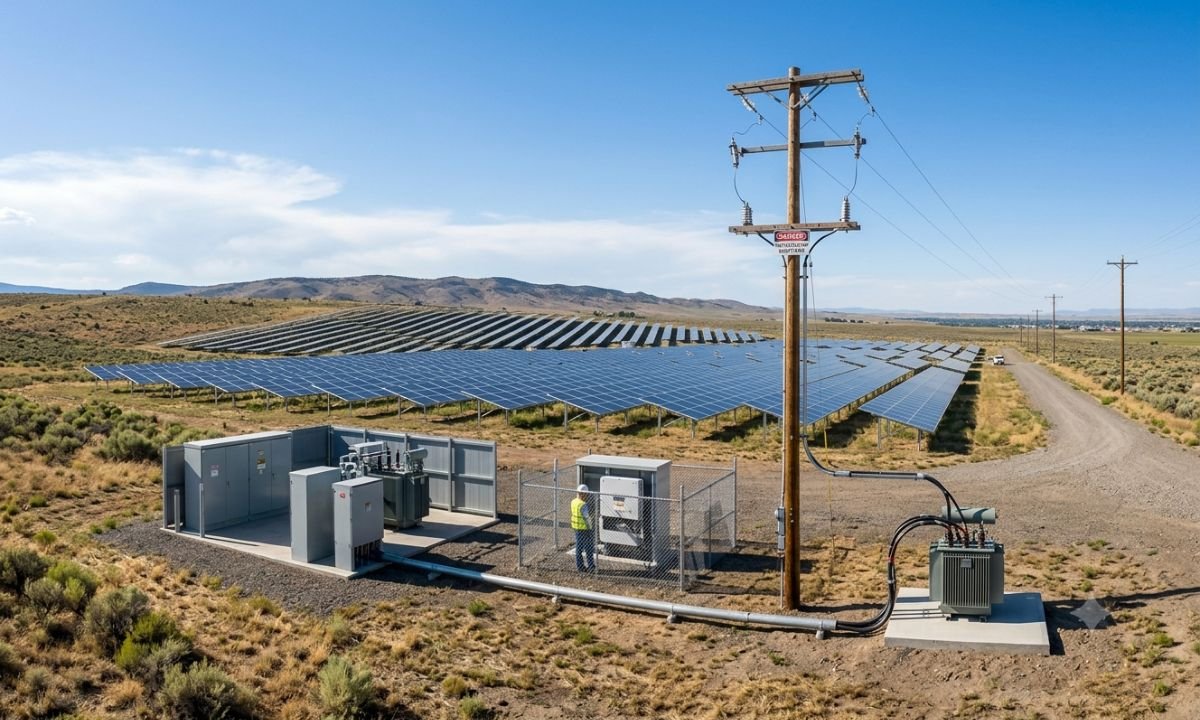
Solar energy is growing fast in Pakistan. More people want clean and affordable power. A 6kW solar system is a popular choice for many homes. This size fits well for medium to large families with normal daily electricity use.
Prices for a 6kW solar system in Pakistan vary in 2026. Based on current market listings, on-grid setups start from around PKR 450,000 to 550,000, while premium hybrid systems with lithium batteries can cost PKR 950,000 or more. The final price depends on the brand, battery type, and inverter quality you choose.
There are different types of 6kW solar systems available. On-grid systems connect to the WAPDA grid and support net metering. Hybrid systems combine solar power, batteries, and grid electricity for backup during load shedding.
A 6kW solar system offers strong daily power output for its price. It can generate 22 to 35 units of electricity daily and cut electricity bills by 60 to 90 percent. This makes it a smart long-term investment for homeowners looking to save money and reduce dependence on the national grid.
What Does a 6kW Solar System Actually Mean
A 6kW solar system means the panels can make 6,000 watts of power at one time. This power runs your home appliances during the day. It also charges your battery if you have one.
Think of it like a water pump. A bigger pump moves more water in less time. A 6kW system moves more electricity than a 3kW or 5kW system. It suits homes that use more power daily.
This size works well for a home with 2 to 3 air conditioners, a fridge, fans, lights, and a washing machine. It is one of the most popular sizes bought in Pakistan right now.
6kW Solar System Price in Pakistan 2026 (Quick Overview)
Here is a simple price table so you get a clear picture right away. Prices change based on brand, battery, and inverter type.
| System Type | Price Range (PKR) | Battery Included |
| On-Grid (Basic) | 450,000 – 650,000 | No |
| Hybrid (Without Battery) | 600,000 – 750,000 | No |
| Hybrid (Lead-Acid Battery) | 750,000 – 900,000 | Yes |
| Hybrid (Lithium Battery) | 850,000 – 1,000,000+ | Yes (Lithium) |
Important note: These prices can shift because of dollar rate changes, import taxes, and market demand. Always ask a local dealer for the latest quote before buying.
Why Prices Are Different for the Same System Size
A lot of people get confused. They see one shop selling a 6kW system for 600,000 rupees and another selling it for 950,000 rupees. Both are called “6kW systems,” but they are not the same.
The price gap comes from these things:
- Panel brand and quality – Tier-1 panels cost more but last longer
- Inverter brand – Chinese budget inverters are cheaper than premium brands like Huawei or Growatt
- Battery type – Lithium batteries cost much more than lead-acid batteries
- Installation quality – Skilled installers charge more but reduce future problems
- Wiring and safety parts – Good quality cables and breakers protect your system
- Warranty length – Longer warranty usually means a higher price
So when you compare prices, always check what is included. A cheap price with a weak inverter is not really a good deal.
Types of 6kW Solar Systems Explained Simply
There are three main types of solar systems in Pakistan. Each one works in a different way. Picking the right type saves you money and stress later.
On-Grid Solar System
This system connects directly to the WAPDA line. It has no battery. During the day, your solar panels power your home. Extra electricity can be sent to the grid through net metering.
At night, you use power from the grid like normal. This is the cheapest option because there is no battery cost.
Best for: People who mainly use electricity during the day and don’t face heavy load shedding.
Off-Grid Solar System
This system works completely on its own. It does not connect to WAPDA at all. It needs a battery to store power for use at night.
This type is useful in areas with no grid connection. But it is less common in cities now because hybrid systems are more flexible.
Best for: Remote areas, farms, or places with no WAPDA supply.
Hybrid Solar System
This is the most popular choice in Pakistan today. It connects to both the grid and a battery. During the day, solar power runs your home and charges the battery.
At night or during load shedding, the battery takes over. If the battery runs low, the system pulls power from the grid automatically.
Best for: Homes that want backup power during outages and want to save on bills at the same time.
Comparison Table: On-Grid vs Off-Grid vs Hybrid
| Feature | On-Grid | Off-Grid | Hybrid |
| Works during load shedding | No | Yes | Yes |
| Needs a battery | No | Yes | Optional |
| Connects to WAPDA | Yes | No | Yes |
| Net metering support | Yes | No | Yes |
| Price | Lowest | Medium | Highest |
| Best for | Daytime use | Off-grid areas | Full backup homes |
6kW Solar System Components and Their Cost
A solar system is not just one thing. It has many parts working together. Knowing each part helps you understand where your money goes.
Solar Panels
Panels turn sunlight into electricity. For a 6kW system, you usually need 10 to 12 panels of around 550-600 watts each.
Panel prices depend on the brand. Well-known brands like Jinko, Longi, and Canadian Solar cost more but produce more power for longer years. Lesser-known brands are cheaper but may not last as long.
Solar Inverter
The inverter changes solar power (DC) into home power (AC) that your appliances can use. For a 6kW system, you need an inverter rated around 6kW or slightly higher.
A hybrid inverter also manages the battery and switches between solar, battery, and grid power automatically.
Battery (Optional but Recommended)
The battery stores extra power for night use or load shedding. There are two main battery types:
- Lead-acid battery – Cheaper, but needs replacement every 2 to 3 years
- Lithium (LiFePO4) battery – Costs more upfront, but lasts 8 to 10 years and needs less care
Mounting Structure
This is the metal frame that holds panels on your roof. It must be strong enough to survive wind and rain. Good structures use galvanized iron or aluminum.
Cables, Breakers, and Safety Parts
These small parts protect your system from short circuits and lightning damage. Never skip good quality wiring just to save a little money. This is where accidents happen if quality is poor.
How Much Electricity Can a 6kW System Produce
This is one of the most asked questions. A 6kW solar system in Pakistan can generate:
- 22 to 32 units (kWh) per day on a sunny day
- 650 to 900 units per month, depending on the season
- More power in summer, less in winter due to shorter daylight hours
This output is enough to run:
- 2 to 3 air conditioners (1-ton or 1.5-ton)
- A refrigerator
- Fans and lights throughout the home
- A washing machine
- TV, router, and small kitchen appliances
Monthly Electricity Bill Savings With a 6kW System
Pakistan’s electricity rates have gone very high. Many homes now pay over 40,000 rupees a month. A 6kW solar system can cut this bill by a large amount.
Here is a simple estimate table:
| Monthly Units Used | Bill Without Solar (Approx.) | Bill With 6kW Solar (Approx.) | Monthly Savings |
| 700 units | Rs. 35,000 | Rs. 5,000 – 8,000 | Rs. 27,000 – 30,000 |
| 900 units | Rs. 47,000 | Rs. 8,000 – 12,000 | Rs. 35,000 – 39,000 |
| 1,100 units | Rs. 60,000 | Rs. 12,000 – 15,000 | Rs. 45,000 – 48,000 |
These numbers are rough estimates. Your actual savings depend on your usage habits, weather, and system quality.
Net Metering and Net Billing Changes in 2026
This part is very important, and many websites do not explain it clearly. In the past, Pakistan used a system called net metering. If you sent 100 units to the grid and used 100 units at night, your bill became almost zero. This was a 1:1 exchange.
But in 2026, NEPRA changed the rules. The new system is called net billing. Under net billing, the extra units you send to the grid are paid back at a lower rate than before, close to the national average power purchase price.
This means the old dream of a “zero electricity bill” is harder to achieve now. But solar is still very useful because:
- You use your own solar power directly during the day, which saves the most money
- You avoid high daytime electricity rates completely
- A hybrid system with a battery reduces your need to rely on grid pricing at all
Simple tip: In 2026, a hybrid system with a battery is usually a smarter choice than a plain on-grid system. This is because direct use of your own solar power saves more than selling it back to the grid at lower rates.
How to Apply for Net Metering (Simple Steps)
If you still want to add net metering to your on-grid or hybrid system, here is the basic process:
- Hire a certified solar installer to design and install your system
- Submit an application to your local DISCO (like LESCO, IESCO, or MEPCO) with your CNIC and electricity bill copy
- Pay the required fee for your system size
- Wait for the DISCO to inspect your installation
- Get your bi-directional meter installed once approved
This process can take a few weeks. Delays usually happen at the DISCO level, not because of your installer.
Best 6kW Solar Panel Brands Available in Pakistan
Not all panels are equal. Here is a simple comparison of common brands sold in Pakistan.
| Brand | Quality Level | Price Level | Notes |
| Jinko Solar | High | Medium-High | Popular, reliable, good warranty |
| Longi Solar | High | Medium-High | Strong efficiency, trusted brand |
| Canadian Solar | High | Medium-High | Good performance in heat |
| JA Solar | Medium-High | Medium | Good value for money |
| Local/Unbranded | Low-Medium | Low | Cheapest, but shorter lifespan |
Simple advice: Do not always chase the cheapest panel. A slightly higher price for a trusted brand often pays off over 10 to 15 years.
Best Inverter Brands for a 6kW System
The inverter is the “brain” of your solar system. A weak inverter can damage the whole system. Here are common choices in Pakistan:
- Huawei – Premium quality, smart monitoring, higher price
- Growatt – Reliable and widely used, good mid-range option
- Solis – Budget-friendly, good for on-grid systems
- Crown and Inverex – Popular local-assembled options, decent value
Always check if the inverter has a good warranty, usually 5 to 10 years, and if local service support is available near you.
Factors That Affect the Final 6kW Solar Price
Many people ask why one shop quotes a different price than another for the same system size. Here are the real reasons:
1. Roof Type and Structure Cost
If your roof is uneven or needs extra support, structure cost goes up.
2. Distance From City
Installation in remote areas may include extra transport and labor charges.
3. Battery Choice
Lithium batteries alone can add 200,000 to 400,000 rupees to your total cost compared to a no-battery system.
4. Dollar Exchange Rate
Most solar equipment is imported. When the dollar rate rises, solar prices usually rise too.
5. Installer Experience
Experienced installers may charge more, but they usually make fewer mistakes and give better after-sale support.
Is a 6kW Solar System Enough for Your Home
Before buying, check your real electricity usage. Look at your last 3 to 6 months of bills and find your average monthly units.
A 6kW system usually fits well if:
- Your average monthly usage is between 600 and 900 units
- You run 2 to 3 ACs along with normal home appliances
- You have a medium-sized house (5 to 10 marla)
You may need a bigger system if:
- You use more than 1,000 units per month
- You have a large house with many rooms and ACs
- You run a small business or shop from the same connection
If unsure, ask your installer to do a proper load calculation before buying. Buying a system too small means it can’t cover your needs. Buying one too big means you waste money.
Maintenance Cost of a 6kW Solar System
Solar systems need very little maintenance, but they are not completely free of care. Here is what you should expect:
- Panel cleaning: Every 2 to 4 weeks, especially in dusty areas
- Battery check: Lead-acid batteries need water top-up and care; lithium needs almost none
- Inverter check: Yearly inspection is enough for most systems
- Wiring check: Once a year, check for loose connections or damage
Yearly maintenance cost is usually very low, often under 10,000 to 15,000 rupees, unless a part needs replacement.
Return on Investment (ROI) for a 6kW System
People often ask, “How many years until my solar system pays for itself?” This depends on your monthly bill savings.
| Monthly Savings | Approx. Payback Time (on 800,000 PKR system) |
| Rs. 25,000 | About 2.7 years |
| Rs. 35,000 | About 1.9 years |
| Rs. 45,000 | About 1.5 years |
After the payback period, all your savings are pure profit for the rest of the system’s life, which is usually 20 to 25 years for good quality panels.
Common Mistakes People Make When Buying a 6kW System
Avoid these mistakes to save money and stress:
- Choosing the cheapest quote without checking component brands
- Skipping proper load calculation before buying
- Ignoring warranty terms on panels, inverter, and battery
- Not asking about after-sale service and support
- Buying from unregistered or unverified dealers
- Not checking if the installer is AEDB or NEPRA certified for net metering work
Taking a little extra time before buying saves a lot of trouble later.
Tips to Get the Best 6kW Solar Price in Pakistan
- Compare at least 3 to 4 quotes from different verified dealers
- Ask for a written itemized quotation, not just a total price
- Check panel and inverter warranty cards, not just verbal promises
- Avoid off-season rush buying when prices can be higher due to demand
- Ask about installation charges separately, since some dealers hide this in the total price
FINAL WORD
A 6kW solar system is a smart choice for Pakistani homes in 2026. It gives enough power for daily needs like fans, lights, and appliances. Rising electricity bills make solar a wise investment. It helps families save money every month.
Prices depend on the type of system you pick. On-grid systems are cheaper but need a stable grid connection. Hybrid systems cost more but work during load shedding. Choose based on your budget and daily power needs.
Always buy from a trusted and verified dealer. Check the quality of panels, inverters, and batteries before buying. A good installation makes the system last longer. This also keeps your system safe and efficient.
In the end, solar energy is worth the investment. It reduces your electric bill and protects you from load shedding. A 6kW system suits most medium to large homes well. Make a smart choice today for a better and brighter future.
FAQs
Can a 6kW system power an entire house?
Yes, a 6kW system can power most homes. It runs fans, lights, a fridge, a washing machine, and 2 to 3 air conditioners at the same time. Very large houses with heavy usage may need a bigger system.
Can 6kW run a fridge?
Yes, easily. A fridge uses very little power compared to the total output of a 6kW system. It can run a fridge along with many other appliances at the same time without any problem.
How many batteries do I need for a 6kW solar system?
This depends on the battery type and your backup needs. Most homes use 2 to 4 lithium batteries or 4 to 8 lead-acid batteries. A local installer can calculate the exact number based on your daily usage.
Which inverter is best for a 6kW solar system?
Huawei and Growatt are strong choices for high quality and reliability. Solis is a good budget-friendly option. Crown and Inverex are popular local choices with decent value and easy service support.
How long does it take to charge a 6kW battery?
A battery usually takes 3 to 6 hours to fully charge on a sunny day. The exact time depends on battery size, panel output, and how much power your home is using at the same time.
Is it better to have more solar panels or more batteries?
It depends on your goal. More panels give faster charging and more daily power. More batteries give longer backup during load shedding. Most homes do well with a balanced mix of both.