
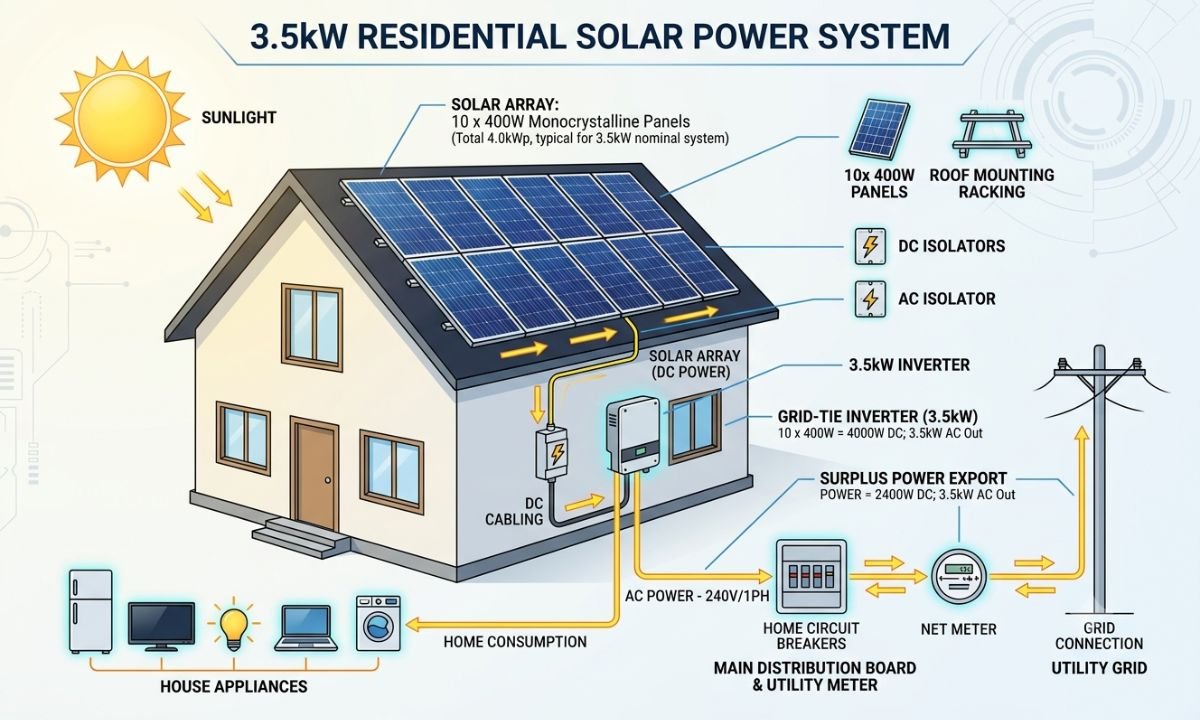
Solar power is now a common choice for homes across Pakistan. Rising electricity bills push many families to look for other options. A 3.5kW solar system is a popular size for medium homes. It offers a good balance between price and daily power needs.
This system size can run most home appliances without much trouble. It powers fans, lights, a fridge, and small kitchen items with ease. Many households pick this size when they want steady backup power. It also works well for areas with frequent load shedding.
The price of a 3.5kW solar system in Pakistan changes often. It depends on the brand, battery type, and installation cost. In 2026, prices generally fall between Rs. 450,000 and Rs. 550,000. This range covers panels, inverter, batteries, wiring, and labor charges.
Solar panel prices have dropped in recent months across the country. This drop makes solar systems more affordable for average income families. Better technology and local competition also help lower overall costs. As a result, more people can now afford clean energy at home.
A 3.5kW system can generate around 18 to 20 units of electricity daily. Over a month, this adds up to nearly 550 to 600 units. This output helps reduce monthly electricity bills by a good margin. Many users report savings of over Rs. 20,000 per month.
Choosing the right solar system depends on your home’s power needs. A 3.5kW setup suits small to medium households well. It offers a smart mix of cost, output, and simple installation. Before buying, it helps to compare local dealers and check current market rates.
Who Is a 3.5kW System For
A 3.5kW solar system is built for small to medium homes. It works well for a family with normal daily electricity use. This size is not too big and not too small. It sits right in the middle for most households.
This system suits people who use fans, lights, a fridge, a washing machine, and a TV. It can also handle one small air conditioner if used carefully. It is not made for homes running two or three ACs at once. For heavy AC use, a bigger system like 5kW or 6kW is a better fit.
A 3.5kW system is also great for small offices and shops. It covers computers, printers, lights, and a small AC unit. Many single-person businesses pick this size because it matches their power needs closely. It keeps the office running without wasting money on extra capacity.
Here is a quick list of ideal users for a 3.5kW solar system:
- Small families of 3 to 5 members
- Retired or senior couples with lower daily power use
- Small apartments or 2-bedroom homes
- Home-based offices or freelancers
- Small shops, clinics, or salons
- Homes in areas with regular WAPDA load shedding
What Is Included
A complete 3.5kW solar system is not just solar panels. It has several parts that work together as one unit. Each part plays its own role in turning sunlight into usable electricity. Missing even one part can affect the whole system’s performance.
Here are the main components of a 3.5kW solar system:
- Solar Panels: Around 6 to 7 panels of 550W each, from brands like Jinko, Longi, or Canadian Solar
- Solar Inverter: A 3.5kW to 4kW hybrid or on-grid inverter from brands like Growatt, Inverex, or Solis
- Mounting Structure: Galvanized Iron (GI) frames to hold panels safely on the roof
- Wiring and Cabling: Outdoor-grade DC and AC wires with proper safety fittings
- Protection Devices: Circuit breakers, surge protectors, and earthing kits
- Battery (Optional): Tubular or lithium battery for backup during outages
- Net Metering Setup: Bi-directional meter for sending extra units back to the grid
A good installer also includes labor charges, transport, and testing in the final price. Some sellers only quote for panels and inverter and charge separately for the rest. Always ask for a complete breakdown before you agree to a price. This helps you avoid hidden charges later.
3.5kW Solar System Price Range
The price of a 3.5kW solar system in Pakistan changes based on a few key factors. Panel brand, inverter quality, and battery type all affect the final cost. Location and installer experience can also shift the price slightly. In 2026, most complete systems fall within a clear and predictable range.
| System Type | Price Range (PKR) | Backup During Outage |
| On-grid (no battery) | 420,000 – 500,000 | No |
| Hybrid with tubular battery | 500,000 – 600,000 | Yes (limited hours) |
| Hybrid with lithium battery | 650,000 – 800,000 | Yes (longer hours) |
On-grid systems are the cheapest option. They connect directly to the WAPDA grid and use net metering to send extra units back for credit. But they stop working during a power outage since they need grid signal to operate. This is an important point many buyers miss.
Hybrid systems cost more but give you real independence from the grid. They keep running your home even when WAPDA power goes off. This makes them the more popular choice among Pakistani homeowners in 2026.
Panel quality also plays a role in pricing. Tier-1 panels from well-known brands cost more but last longer and produce more power over time. Cheaper, unbranded panels may save money upfront but often lose efficiency faster. It is usually smarter to spend a little more on trusted brands.
Monthly Generation and Savings
A 3.5kW solar system can produce a good amount of electricity every day. On a normal sunny day, it generates around 15 to 18 units of electricity. In peak summer months with strong sunlight, this can rise to 18 to 20 units per day.
Over a full month, this adds up to roughly 450 to 550 units. This is enough to cover most of a small household’s monthly electricity needs. Many families see their WAPDA bill drop sharply after installation.
Here is a simple monthly savings estimate based on 2026 electricity rates:
| Monthly Units Generated | Approximate Bill Savings (PKR) |
| 450 units | 18,000 – 22,000 |
| 500 units | 20,000 – 24,000 |
| 550 units | 22,000 – 27,000 |
These numbers can shift based on your local tariff slab and how much sunlight your area gets. Cities like Multan, Bahawalpur, and Sukkur usually get more sunlight hours than northern areas. This means slightly higher generation in southern parts of Punjab and Sindh.
It is also worth noting that electricity prices in Pakistan have kept rising over the years. Bills for a normal home now often cross Rs. 30,000 to 40,000 per month. This makes the savings from solar even more valuable compared to just a few years ago.
Payback Period
Payback period means the time it takes for your savings to equal the amount you spent. For a 3.5kW solar system, this period is shorter than most people expect. It depends on your system cost, your monthly savings, and how much sunlight your home gets.
For a basic on-grid 3.5kW system costing around Rs. 480,000, with monthly savings of Rs. 20,000, the payback period is close to 2 years. For a hybrid system with a battery costing around Rs. 700,000, payback takes closer to 3 years. After that period, the electricity you use is almost free.
Here is a simple way to understand the math:
- Take your total system cost
- Divide it by your average monthly savings
- The result is your payback period in months
A solar panel system usually lasts 25 to 30 years with proper care. This means after the payback period ends, you enjoy 20 or more years of nearly free electricity. This long lifespan is one of the biggest reasons solar makes financial sense in Pakistan.
3.5kW Solar System with Battery Price in Pakistan
Adding a battery to your 3.5kW system changes both the price and the performance. Batteries store extra solar power so you can use it at night or during an outage. Without a battery, your system only works while the sun is out and the grid is connected.
There are two main battery types available for solar systems in Pakistan.
Tubular Batteries
- Cost: Around Rs. 60,000 to 85,000 per battery
- Lifespan: 3 to 5 years with daily solar use
- Maintenance: Needs regular water top-ups
- Backup time: Shorter, usually a few hours
Lithium Batteries
- Cost: Around Rs. 40,000 to 55,000 per kWh of capacity
- Lifespan: 8 to 10 years or more
- Maintenance: None needed
- Backup time: Longer, often 6 to 10 hours depending on load
A 3.5kW hybrid system with two tubular batteries usually costs between Rs. 550,000 and 620,000. The same system with a 5kWh lithium battery pack costs closer to Rs. 700,000 to 800,000. Lithium costs more upfront but saves money over time since it lasts much longer and needs no upkeep.
Many buyers in 2026 are shifting toward lithium batteries. This is partly because Pakistan moved from full net metering to a net billing system. Under net billing, sending extra units back to the grid pays less than before. This makes storing your own power in a battery a smarter financial move than exporting it.
3.5kW Solar System on Installment in Pakistan
Not every family can pay the full price of a solar system at once. Because of this, many banks and solar companies now offer installment plans. These plans let you spread the cost over several months or years.
Common installment options in Pakistan include:
- Bank Solar Financing: Many banks offer solar loans with markup rates between 15% to 20% per year, repaid over 3 to 5 years
- Company Installment Plans: Some solar installers offer 6 to 12-month plans directly, often with a down payment of 30% to 50%
- Green Energy Loans: Certain government-backed schemes offer lower markup rates for renewable energy projects
- Leasing Models: A few companies let you rent the system with a monthly fee instead of buying it outright
Before choosing an installment plan, it helps to compare the total cost with and without financing. A loan may make the system easier to afford each month, but the total amount paid over time will be higher due to markup. It is smart to check at least two or three banks before signing any agreement.
Ask your installer these questions before choosing installment financing:
- What is the total cost including markup or interest?
- Is there a penalty for early payoff?
- Does the plan include maintenance and warranty support?
- What happens if a payment is missed?
A clear answer to these questions helps you avoid surprises later. Installment plans work best for people with steady monthly income who want to start saving on bills right away without waiting to save the full amount.
Real-World Use Case: 2-Bedroom Apartment, Small Office, or Senior Couple’s Home
2-Bedroom Apartment
A small family living in a 2-bedroom apartment uses power for lights, fans, a fridge, a TV, and a washing machine. Their average monthly bill before solar might be around Rs. 18,000 to 22,000. A 3.5kW on-grid system can cover almost all of this load during the day.
If the apartment also runs one small AC in the evening, a hybrid system with a small battery works better. This keeps essential appliances running even after sunset. The system pays for itself within 2 to 3 years in most cases.
Small Office
A small office with 3 to 4 computers, printers, lights, and a water dispenser has fairly predictable daytime power use. Since offices mostly run during sunlight hours, a 3.5kW on-grid system fits perfectly. There is little need for a large battery since the office is usually closed at night.
This setup helps the business cut its monthly electricity cost significantly. Many small business owners in Pakistan report savings between Rs. 15,000 and 25,000 per month after switching to solar.
Senior Couple’s Home
An older couple living alone usually has lower daily power use compared to a full family. Their needs often include lights, a fan or two, a fridge, and a TV. A 3.5kW system is more than enough to cover their entire daily consumption.
For senior citizens, backup power is often more important than saving money. A hybrid system with a small lithium battery gives peace of mind during outages. It also means less physical strain, since lithium batteries need no manual maintenance.
What to Consider Before Installing
Buying a solar system is a big decision, and a few careful checks can save you from future trouble. Here are the most important things to think about before you sign any agreement.
- Roof Space and Direction: Your roof should get direct sunlight for most of the day, ideally facing south
- Shading: Trees, water tanks, or nearby buildings should not block sunlight on the panels
- Load Requirements: Make a list of all appliances you plan to run so the installer can size the system correctly
- Panel and Inverter Brand: Stick to known brands with a proven track record in Pakistan
- Warranty Terms: Panels usually carry 10 to 25 years of warranty, while inverters carry 2 to 5 years
- After-Sales Support: Choose an installer who offers local service and quick response for repairs
- Net Metering Approval: Check if your installer handles the paperwork with your local electricity company
- Battery Needs: Decide early if you need backup power or are fine with an on-grid setup
It also helps to get quotes from at least three different installers before deciding. Prices can vary quite a bit between companies for the same system size. Comparing quotes side by side makes it easier to spot a fair price versus an overpriced offer.
Ask each installer for a written quotation that lists every component separately. This should include panel wattage, inverter model, battery type, and installation charges. A vague, all-in-one price without details is often a warning sign.
Solar Citizen’s Approach
A smart solar buyer does not just chase the lowest price. Instead, they look at the full picture, including quality, warranty, and long-term reliability. This approach saves money in the long run, even if the upfront cost looks slightly higher.
Here is a simple, practical approach every buyer should follow:
- Understand your actual power needs before asking for quotes
- Compare at least three installers with detailed, itemized pricing
- Choose Tier-1 panels and branded inverters over cheaper, unknown options
- Decide on battery type early, based on budget and backup needs
- Check installer reviews and past project photos before signing any contract
- Confirm net metering support is included in the service
- Read the warranty terms carefully, including what voids them
Following this step-by-step approach helps buyers avoid common mistakes. Many people regret picking the cheapest quote after facing poor performance or bad after-sales service within a year. A little extra research before buying saves both money and stress later.
Related Resources
- Solar panel brands available in Pakistan and how to compare them
- Net metering vs net billing rules under NEPRA
- Difference between on-grid, off-grid, and hybrid solar systems
- How to calculate the right solar system size for your home
- Solar inverter brands and their warranty terms in Pakistan
Related Reading
- 5kW solar system price and savings guide
- Complete solar battery buying guide for Pakistani homes
- How rising electricity tariffs are pushing more homes toward solar
- Solar system maintenance tips for longer panel life
- Government incentives and loan schemes for renewable energy in Pakistan
A 3.5kW solar system is one of the smartest and most balanced choices for Pakistani homes and small businesses in 2026. It offers enough power for daily needs without over-spending on capacity you will never use. With prices becoming more affordable and financing options widely available, going solar has never been easier.
Before you buy, take time to compare quotes, check component quality, and pick the right battery type for your needs. A well-planned 3.5kW system can pay for itself within a few years and then keep saving you money for decades. In a country where electricity bills keep rising, this small step can make a big difference for your home or business.
FINAL WORD
Final Word: 3.5kW Solar System Price in Pakistan 2026
A 3.5kW solar system is a smart investment for many Pakistani homes. It offers a good mix of power output and price. Families looking for steady backup and lower bills often pick this size. It fits well within a normal household budget.
Prices for this system size range between Rs. 450,000 and Rs. 550,000 in 2026. The exact cost depends on your area, brand, and battery choice. Quality panels and inverters can push the price a bit higher. Always compare a few dealers before making your final decision.
This system size covers most daily household needs without any strain. It runs fans, lights, a fridge, and small appliances at once. Running a full AC unit may need some load management though. For heavy AC use, a bigger system like 5kW or 6kW works better.
Savings from this system can be significant over time. Many users see a drop of Rs. 20,000 or more in monthly bills. Over a few years, the system often pays for itself completely. After that, the electricity you use is nearly free.
Solar technology keeps improving and prices keep becoming more reasonable. Local competition among dealers has made systems more affordable than before. This trend is likely to continue through the rest of 2026. Now is a good time to make the switch to solar.
In the end, a 3.5kW solar system offers real value for money. It balances upfront cost with long-term savings quite well. Before buying, always check installer reviews and warranty terms carefully. A well-installed system can serve your home reliably for many years.
FOQs
What is the price of 3.5 kVA inverter in Pakistan?
A 3.5 kVA inverter in Pakistan usually costs between Rs. 90,000 and Rs. 150,000. The price depends on the brand, hybrid features, and warranty length.
Can a 3.5 kVA inverter carry AC?
Yes, a 3.5 kVA inverter can run one small to medium AC unit, like a 1 ton AC. Running a 1.5 ton or 2 ton AC along with other appliances may overload it.
What is the cost of 3.5 KW solar system?
A complete 3.5kW solar system costs between Rs. 420,000 and Rs. 800,000 in 2026. The price changes based on battery type and whether it is on-grid or hybrid.
Can I run 1.5 ton AC on a 3kW solar system?
A 3kW solar system can struggle to run a 1.5 ton AC along with other home appliances at the same time. It works better if the AC runs alone during strong sunlight hours.
How many solar panels for a 3.5 kVA inverter?
A 3.5 kVA inverter usually needs 6 to 7 solar panels of 550 watts each. This gives a total capacity close to 3.5kW to 4kW.
What is the cost of 3.5 kVA solar inverter?
A 3.5 kVA solar inverter alone costs around Rs. 90,000 to 150,000 in Pakistan. Hybrid models with battery support cost more than basic on-grid models.
How much is 3.5 kVA solar?
A full 3.5 kVA solar setup, including panels, inverter, and installation, costs between Rs. 450,000 and Rs. 550,000. Adding a battery can push the price higher, up to Rs. 800,000.
Can I use 2 batteries with a 3.5 kVA inverter?
Yes, most 3.5 kVA hybrid inverters support 2 batteries connected together. This gives longer backup time during power outages.
How many battery is required for a 3kW solar system?
A 3kW solar system usually needs 1 to 2 tubular batteries for basic backup power. If using lithium, one 5kWh lithium battery is often enough for most homes.