
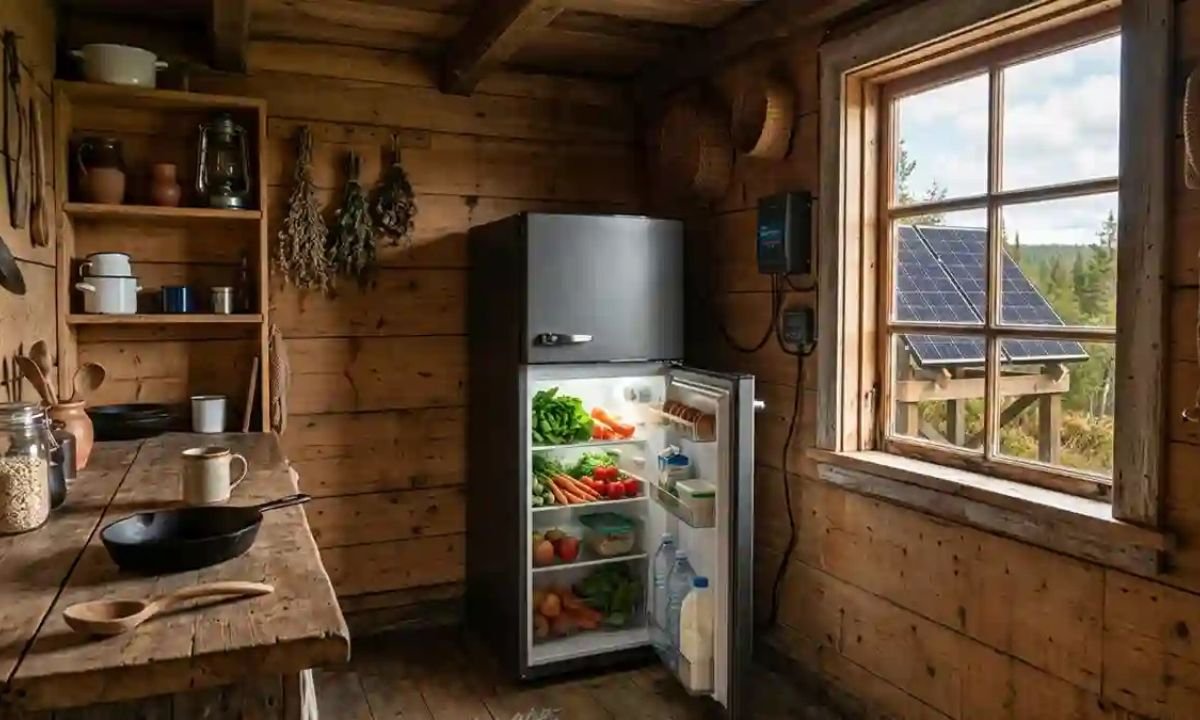
A solar refrigerator is a smart cooling solution that runs on power from the sun instead of regular electricity. It uses solar panels to charge a battery, which then keeps your food and drinks fresh all day long. This makes it perfect for homes, shops, and areas with frequent power cuts. Many people now choose solar fridges to save money and reduce their electricity bills.
A DC fridge is a refrigerator that runs directly on DC (Direct Current) power, usually from a battery or solar panel. Unlike normal fridges, it does not need an inverter, which saves energy and reduces power loss. DC fridges are widely used in solar homes, camping vans, boats, and off-grid locations. They are known for being energy-efficient and reliable even in areas with limited power supply.
Together, solar refrigerators and DC fridges offer a clean, cost-effective, and eco-friendly way to keep things cool without depending on the main power grid. They are ideal for both urban and rural areas, especially where electricity is unstable or unavailable. With rising energy prices, more people are switching to these fridges for long-term savings. This makes them a smart investment for a sustainable future.
ALSO READ: SOLAR AC PRICE IN PAKISTAN
What Is a Solar Fridge?
A solar fridge, also called a solar powered refrigerator, is a refrigerator that gets its energy from sunlight instead of the electricity grid. Here is how it works, step by step:
- Sunlight falls on a solar panel.
- The panel changes sunlight into DC (Direct Current) electricity.
- A charge controller sends this electricity into a battery, so power is not wasted.
- The battery stores the energy and gives it to the fridge whenever it is needed — even at night or on a cloudy day.
Most solar fridges today are DC refrigerators. This means the compressor (the small motor that cools the fridge) can run directly on 12V or 24V battery power. Because there is no need to change DC power into AC power, a DC fridge wastes less energy and needs a smaller solar setup than a normal AC fridge would.
Simple keywords to remember: solar panel, photovoltaic cell, DC power, battery bank, charge controller, compressor.
ALSO READ: SOLAR WASHING MACHINE PRICE IN PAKISTAN
Solar Refrigerators and Freezers — Which Do You Need?
Solar cooling units are not all the same. Some only cool, and some freeze. Picking the right one saves power and money.
| Type | Best For | Approx. Temperature |
| Solar Refrigerator | Milk, fruit, drinks, everyday food | 2°C to 8°C |
| Solar Freezer | Meat, ice, frozen meals, long storage | -18°C or colder |
| Solar Fridge-Freezer Combo | Homes that need both in one box | Fridge and freezer zones |
A single-purpose fridge or freezer usually uses less power than a combo unit of the same size, because it only cools one zone. So, if you only need to chill drinks and vegetables, a simple solar fridge is a smarter, energy-saving choice than a combo.
Quick Tip
- Choose a fridge only if you mostly store fresh food.
- Choose a freezer only if you mainly store frozen food.
- Choose a combo only if you truly need both, since it uses more solar power.
How Much Solar Power Does a Refrigerator Need?
This is the most important question before buying anything. Most home refrigerators use about 100 to 400 watts of power and need roughly 1 to 2 kWh (kilowatt-hours) of electricity every day. Energy-saving DC fridges usually sit at the lower end of this range.
Here is a simple way to work it out:
Daily energy need (Wh) ÷ Sun hours per day = Solar panel wattage needed
For example, if your fridge needs 1,500 Wh per day and your area gets 5 hours of strong sunlight, you would need panels that make about 300 watts per hour of sunlight.
| Fridge Daily Use | Sun Hours | Solar Panel Size Needed |
| 1,000 Wh/day | 5 hours | About 200–250 W |
| 1,500 Wh/day | 5 hours | About 300–350 W |
| 2,000 Wh/day | 4 hours | About 500 W |
A general rule many guides use: 3 to 6 solar panels of 100W each can run a typical full-size refrigerator, depending on sunlight and fridge size.
Refrigerator on Solar Power — The Two Things That Determine Success
Getting a fridge to run well on solar power really comes down to just two parts working together correctly.
1. The Battery
- Lithium (LiFePO4) batteries are usually the best choice for solar fridges today.
- They last longer, handle deeper daily use, and perform well even in hot places.
- A well-sized battery should be able to run your fridge through the whole night without any sun.
2. The Charge Controller
- The charge controller is the link between the solar panel and the battery.
- An MPPT charge controller pulls more energy out of the same panels than an older, basic controller — especially when it is partly cloudy.
- A good controller also protects the battery from overcharging.
If both of these parts are sized correctly for your fridge, your solar cooling system can run smoothly for years without trouble.
Solar Power for Refrigerator — What the Full System Looks Like
A complete solar refrigerator setup usually has these parts working together:
- Solar panel(s): Collect sunlight and turn it into DC electricity.
- Charge controller: Controls how power flows from the panel to the battery.
- Battery bank: Stores extra energy for night-time and cloudy days.
- DC fridge (or inverter + AC fridge): Uses the stored power to stay cold.
- Wiring and fuses: Keep the system safe from short circuits.
Do You Need an Inverter?
- A DC fridge plugs straight into the battery. No inverter is needed, so less energy is lost.
- A normal AC fridge needs an inverter to change the battery’s DC power into AC power. This extra step uses more energy and adds cost.
This is why most people building an off-grid or solar-only cooling system now choose a dedicated DC fridge over a regular household fridge.
Best Solar Refrigerators in 2026 — Full Comparison
Here is a simple comparison of common solar fridge types and what they are generally used for. Prices and models change often, so always check current listings before buying.
| Category | Good For | Power Draw | Notes |
| Small DC cooler (40–60L) | Camping, small households | Low | Easy to power with 1–2 panels |
| Mid-size solar fridge (100–150L) | Family kitchens, small shops | Medium | Needs a proper battery bank |
| Solar fridge-freezer combo | Homes needing both cooling zones | Medium-High | Uses more solar capacity |
| Solar chest freezer | Bulk food or medical storage | Medium | Very energy efficient per litre |
When comparing models, look at three numbers: daily watt-hour use, size in litres, and battery voltage (12V/24V). These three numbers will tell you more than the price tag alone.
Portable Solar Powered Fridge
A portable solar fridge is a small, lightweight cooling box that can run on a battery and be charged with a foldable solar panel. It is popular for:
- Camping trips
- Road trips and picnics
- Emergency food storage during power cuts
- Fishing and outdoor work
Most portable solar fridges run on 12V DC power and can plug into a car socket, a portable power station, or a small solar panel. They are usually smaller (20–60 litres) and made to be carried easily.
Solar Power for RV Fridge
Recreational vehicles (RVs), vans, and boats often use DC fridges because they already run many devices on 12V or 24V battery systems.
Key things to know for an RV solar fridge setup:
- Compressor-based DC fridges are usually better than older absorption fridges because they cool faster and use less energy.
- A rooftop solar panel charges the RV’s battery bank while driving or when parked in the sun.
- A small lithium battery bank (100Ah or more) can usually run a compressor RV fridge through the night.
- Good ventilation around the fridge helps the compressor work better and use less power.
Solar Refrigerator Sizing by Region
Where you live changes how big your solar system needs to be. This is because some places get more sunlight hours than others.
| Region Type | Average Sun Hours | Sizing Advice |
| Sunny/Tropical areas | 5–7 hours/day | Smaller panel array is enough |
| Moderate climate areas | 4–5 hours/day | Standard sizing works fine |
| Cloudy/Northern areas | 3–4 hours/day | Add extra panel capacity, not extra battery |
The general rule is: fewer sun hours mean you need bigger panels, not necessarily a bigger battery. The battery’s job is to cover the night and short cloudy spells. The panel’s job is to refill that battery fast enough during the day.
Is a Solar Powered Refrigerator Worth It? 10-Year Cost Breakdown
Many people ask if spending money on solar cooling is worth it in the long run. Here is a simple way to think about it:
| Cost Factor | Regular Grid Fridge | Solar DC Fridge |
| Upfront cost | Lower | Higher (panel + battery + fridge) |
| Monthly electricity bill | Ongoing cost | Little to none |
| Power cut protection | None | Full protection |
| Long-term 10-year cost | Adds up steadily | Often lower after a few years |
In areas with unreliable electricity, a solar fridge also protects against food spoilage, which is a hidden cost many people forget to count. Over about 10 years, the savings from not paying an electric bill can add up to a meaningful amount, especially in regions where electricity prices are high.
Maintenance: 3 Things That Keep Your Solar Fridge Running for Years
A solar fridge does not need much care, but a few simple habits keep it working well for a long time.
- Clean the condenser coils regularly. Dust buildup makes the compressor work harder and use more power. A quick brush-down every two to three months helps a lot.
- Check your battery health. Keep an eye on charge levels and avoid letting the battery drain too low too often.
- Keep the solar panel clean and unblocked. Dust, leaves, or shade can quietly cut down how much power your panel makes each day.
FINAL SUMMARY
Solar refrigerator and DC fridge prices in Pakistan vary widely, ranging from budget-friendly mini fridges to premium full-size models. Brands like Haier, Dawlance, and Sogo offer solar-compatible options that work smoothly with inverters, UPS, and solar panels. Choosing the right model depends on your family size, power needs, and budget.
A 12V DC fridge is a smart and affordable choice for homes facing frequent load shedding, since it uses very little electricity and runs easily on solar power. These fridges help families save money on monthly bills while keeping food fresh during power outages. With rising electricity prices across Pakistan, more people are shifting towards solar-friendly refrigerators every year.
Overall, investing in a solar refrigerator or DC fridge is a practical and cost-effective solution for Pakistani households in 2026. It reduces dependency on the national grid and ensures uninterrupted cooling all day long. As solar technology keeps improving, these fridges are becoming an even smarter long-term investment for homes and small businesses alike.
FAQs
Haier solar fridge price in Pakistan 2026?
Haier does not sell a dedicated “solar fridge” model, but its Digital Inverter refrigerators run well on solar/UPS systems. These start around Rs. 34,000–96,999 and go up to Rs. 350,000+ depending on size and features.
Solar fridge price in Pakistan 2026 on OLX?
On OLX, used and new solar-compatible fridges and inverter refrigerators typically range from around Rs. 40,000 to Rs. 2.5 lac, depending on brand, size, and condition. Prices vary daily based on seller location and demand.
12V solar fridge price in Pakistan?
Dedicated 12V DC solar fridges (like Sogo’s 60L solar refrigerator) are generally priced lower than full-size household fridges, often falling in the budget-to-mid range for a compact unit. Larger 12V/24V dual-power solar fridges or freezers cost more due to bigger compressors and insulation.
Dawlance solar fridge price in Pakistan 2026?
Dawlance doesn’t make a dedicated solar fridge, but its Inverter Refrigerators start from around Rs. 64,500 and work well with a 1kVA solar system. These models use very little power (120–180 watts), making them solar-friendly.
Haier solar fridge price in Pakistan?
Haier’s solar-friendly inverter fridges range widely, from about Rs. 96,999 for entry-level models to over Rs. 188,000 for larger units. The exact price depends on capacity, features, and whether it’s a double-door or side-by-side design.
Haier solar fridge price in Pakistan for medium size?
A medium-size Haier fridge (11–12 cubic feet, models like HRF-306/336) usually costs between Rs. 64,600 and Rs. 126,000. These sizes are popular for families of 4–5 people running on solar or UPS backup.
Dawlance solar refrigerator price in Pakistan?
Dawlance’s medium-size inverter refrigerators, well-suited for solar use, are priced roughly between Rs. 82,000 and Rs. 133,000. Full-size inverter models can go up to around Rs. 329,900.
Solar Mini Fridge price in Pakistan?
Solar mini fridges (usually 12V DC, 40–60 litres) are among the most affordable solar cooling options, ideal for bachelors, small offices, or camping. They cost noticeably less than full-size units since they use smaller compressors and batteries.